A clearer first visit
Spanish-first information design and responsive navigation support a bilingual audience.
Web and creative systems
Bilingual web and media work, plus a contextual review tool that lets a stakeholder point to the exact part of a page.
Web and media design, plus a separate review tool that keeps feedback attached to its page context.
Archived website demonstration
Explore the Spanish-first website with English switching, then try section feedback and review insights using fictional responses. Original stakeholder records remain private.
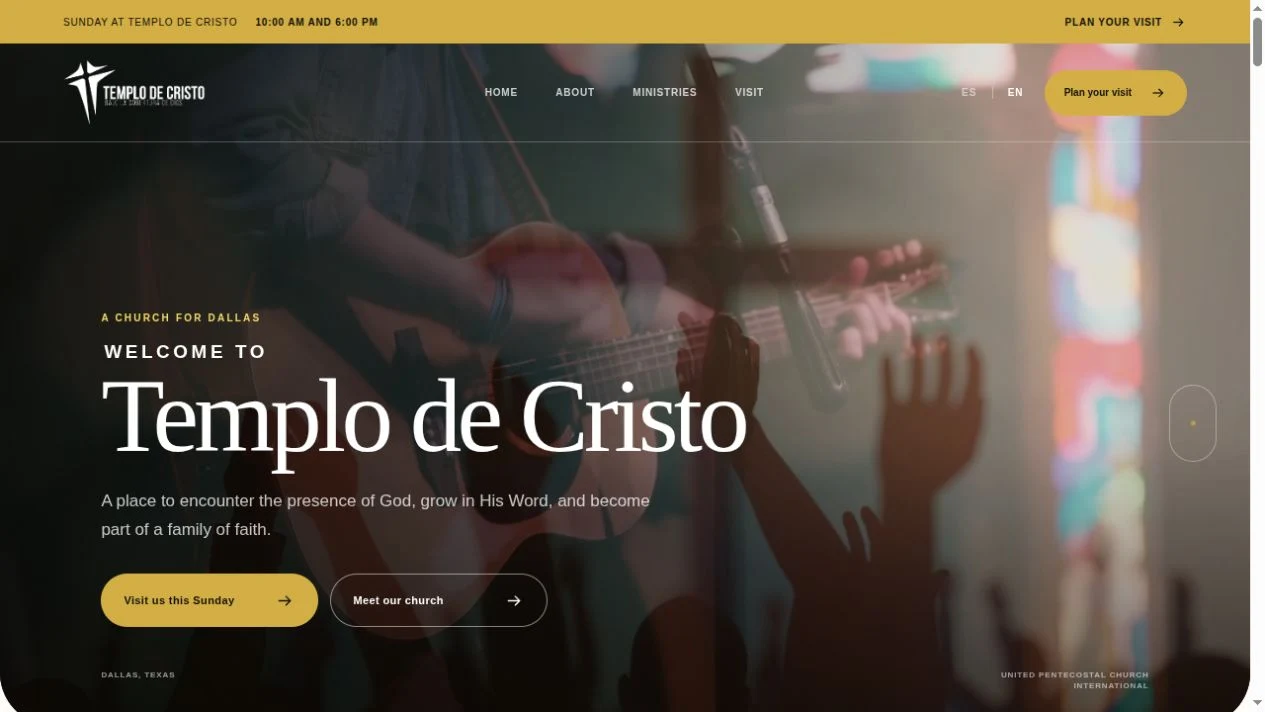
Original interface reconstruction with fictional feedback. The website, media work and private stakeholder-review tool are distinct projects.
02 / The problem
A website needs to work for the first-time visitor and for the people improving it. General comments lose context when they arrive in another message, screenshot or spreadsheet.
I paired bilingual information design with a separate review experience. A stakeholder can mark a section, explain the issue and keep that context attached as the feedback moves into an owner dashboard.
04 / Result & scope
Current TDC website and stakeholder-review source, plus owner-confirmed graphics, motion and web experience. The separate WordPress salvage-comparison source records the incomplete backup and recovery assessment.
Spanish-first information design and responsive navigation support a bilingual audience.
Pins, highlights and comments keep their section context across the review flow.
The owner dashboard brings section feedback, ratings and export into a usable review surface.
Spanish-first navigation, mobile layouts and clear first-visit paths shape the website. Graphics, motion and media carry the same message across surfaces.
Pins and highlights attach feedback to the page section being discussed. The example lets you select a section and watch its note remain associated.
Section-level review, distributions and export support a focused design discussion. Real responses remain private; only fictional review notes appear here.
I investigated a historical WordPress archive before treating it as a recoverable website. It contained the application footprint and bundled themes, but lacked the database, uploaded media and custom identity needed for a faithful restoration. The comparison work made the rebuild decision concrete. This was a recovery assessment, not a successful restoration of the former site.
The archive retains both the bilingual website and the separate stakeholder-review tool. Visitors can follow the first-visit journey, switch language where supported, then explore how contextual feedback supports a website revision. Both demonstrations are grouped under the same Templo project family.
Review interactions use resettable sample notes and browser-local state. Private stakeholder responses and original records are excluded from the public edition. The maintained archive preserves the interaction design and route structure, while the original source and any private runtime state remain separately protected.
More of the work
Choose a project. See where it leads.